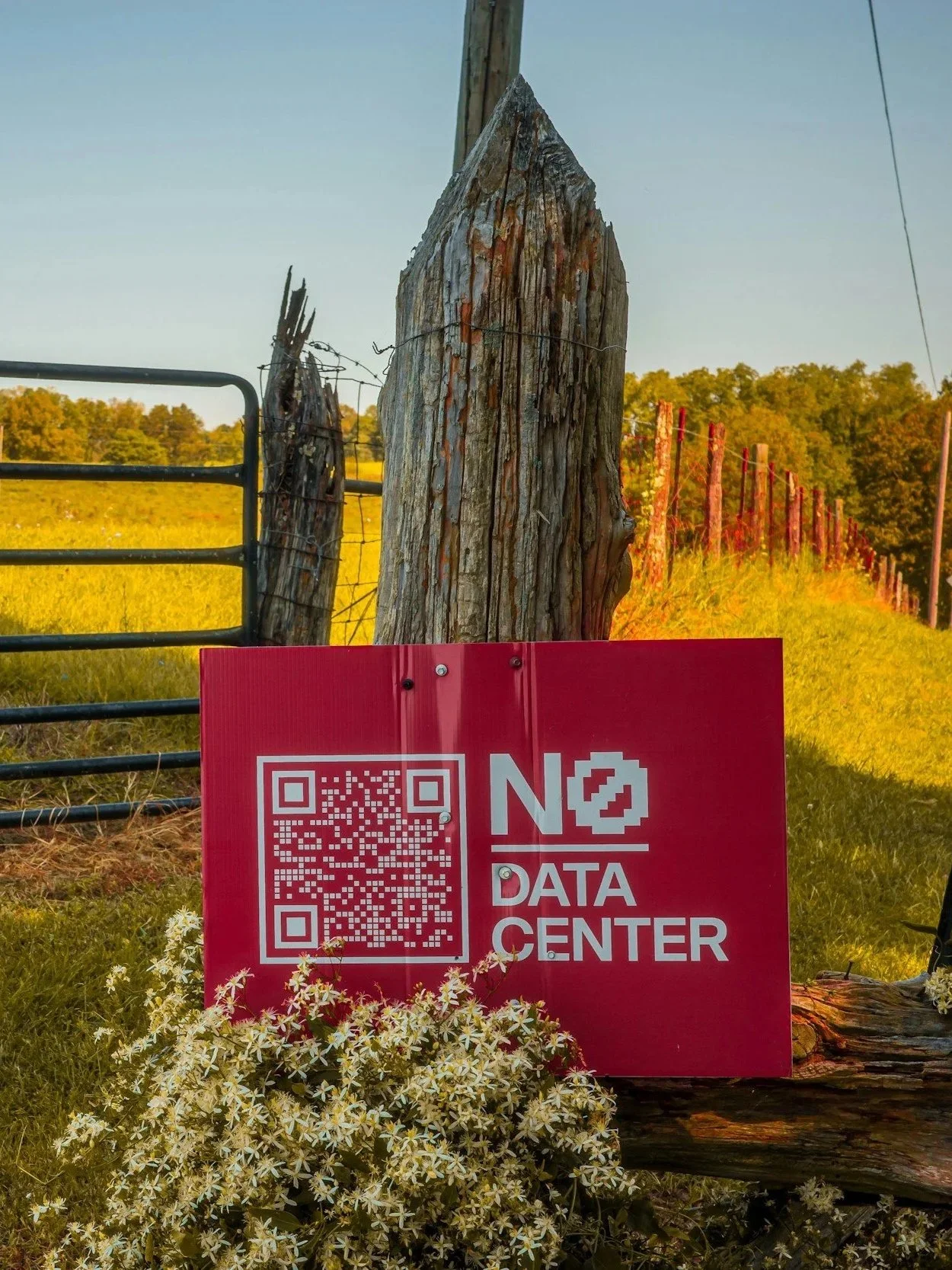
REGULATORY ORDINANCE
INTRODUCTION: Lorem ipsum dolor sit amet consectetur adipiscing elit facilis et nostrud cillum dolorum facere eiusmod fuga excepteur qui voluptatum temporibus odio et est eos quo sit omnis assumenda cupiditate est cumque voluptas est expedita minim quas fugiat autem sint nam harum cupiditate iusto est.
DEFINITION: Lorem ipsum dolor sit amet consectetur adipiscing elit facilis et nostrud cillum dolorum facere eiusmod fuga excepteur qui voluptatum temporibus odio et est eos quo sit omnis assumenda cupiditate est cumque voluptas est expedita minim quas fugiat autem sint nam harum cupiditate iusto est cupidatat distinctio.
<p>Hello, World!</p>
REGULATORY ORDINANCE
SECTION 1. OVERVIEW
The [GOVERNING BODY] finds that data centers present widespread impacts not adequately addressed by conventional commercial or industrial classifications, particularly with respect to energy demand, water consumption, air quality, greenhouse gas (GHG) emissions reductions targets, land use, and infrastructure cost-shifting, community impacts, public service capacity, and the potential to bear costs associated with new infrastructure demand. Clear, predictable, and publicly available permitting standards serve the interests of both the community and the industry.
The Ordinance is intended to ensure that the costs associated with data center development are borne by the applicants and operators responsible for generating those impacts and do not shift unreasonable costs to existing residents, ratepayers, taxpayers, or public institutions.
This Ordinance governs all data centers that are proposed, constructed, expanded or materially altered within [MUNICIPALITY]. This Ordinance supplements applicable federal, state, and other local requirements. Where legally permissible, where a conflict exists, the more protective standard applies.
SECTION 2. DEFINITIONS
[ANY GREEN TEXT ADDED IN SUBSEQUENT SECTIONS SHOULD HAVE DEFINITION AGGREGATED HERE].
[EVERY DEFINITION SHOULD ALSO ALLOW FOR CUSTOM VERSION IN CASE MUNICIPALITY ALREADY HAS DEFINITION].
-
Section [#]. ENERGY REFORM
[#].01 Energy and Capacity Requirements for Hyperscale Data Centers
For any hyperscale data center approved on or after the date [12 MONTHS] subsequent to the effective date of this Act, including any expansion to an existing data center that increases its covered electrical load by [25 OR 50] megawatts or more, all electricity supplied to or utilized by the hyperscale data center, as measured on an hourly basis, shall be derived from qualifying energy.
Verification: Compliance with the hourly matching requirement above shall be substantiated using hourly or sub-hourly generation and consumption data issued by an accredited granular certificate issuer, or an equivalent independently audited hourly energy-tracking system approved by the [PUBLIC UTILITY COMMISSION]. Unbundled annual renewable energy certificates and self-reported estimates shall not satisfy this requirement.
Reporting: Hyperscale data center operators shall submit [quarterly?] compliance reports to the [PUBLIC UTILITY COMMISSION], documenting the percentage of hourly load matched to qualifying energy using the verification method in subsection 1, and shall make a public-facing summary of this data available consistent with [existing regulation].
Noncompliance: A data center that fails to meet its applicable hourly matching percentage for a given compliance period shall be subject to a penalty of [$XX per MWh of shortfall], payable to [state clean energy or environmental justice fund?], and shall submit a corrective plan to the Commission within 30 days.
[#].02 Enabling Public Utility Commission Rulemaking and Ratemaking Proceedings
The [PUBLIC UTILITY COMMISSION] is authorized to adopt rules and regulations as may be necessary and appropriate to ensure effective implementation of the Act. Should the [PUBLIC UTILITY COMMISSION] determine that any type of qualifying energy can be effectively provided through utility clean energy hyperscale data center tariffs, then the [PUBLIC UTILITY COMMISSION] may commence proceedings to develop such tariffs.
If the Public Utility Commission makes such a determination, then, within [18 MONTHS] of the effective date of this Act, the [PUBLIC UTILITY COMMISSION] shall require each utility to offer a clean energy hyperscale data center tariff. Such tariffs shall be subject to approval by the [PUBLIC UTILITY COMMISSION] and include conditions necessary to ensure that hyperscale data centers meet the Act’s requirements.
[#].03 Establishing Hyperscale Data Center Customer Class
The [PUBLIC UTILITY COMMISSION] shall provide for a classification of service for hyperscale data center facilities. The classification of service must be separate and distinct from classifications of service for other commercial or industrial retail electricity consumers and have its own tariff schedule.
[#].04 Tariff Requirements
Any hyperscale data center tariff schedule adopted by the commission for the class must allocate the costs of serving the class of retail electricity consumers that are hyperscale data center facilities to the class in a manner that is equal or proportional to the costs of serving the class.
In deciding whether to approve a proposed tariff schedule of an electric company for a hyperscale data center, the commission shall consider whether the tariffs:
Provide for equitable contributions to grid efficiency, reliability and resiliency benefits;
Impede the electric company’s ability to meet the clean energy targets set forth in [REFERENCE] or reduce the emissions of greenhouse gases consistent with state policy;
Allow for procurement of or contracts for generation resources that support the electric company’s ability to meet the clean energy targets set forth in [REFERENCE] or reduce the emissions of greenhouse gases consistent with state policy; and
Meet any other conditions the commission may require in the public interest
The Commission shall adopt an interconnection queue system for the hyperscale data center class that ensures a data center can only be energized once sufficient emissions-free generation is available to avoid hindering compliance with state clean energy targets set forth in [REFERENCE] and achieve state targets for the emissions of greenhouse gases.
[#].05 Mandatory Curtailment Participation
As a condition of interconnection under [EXISTING CLEAN ENERGY GOALS], a data center with a covered electrical load of 75 MW or more shall be capable of reducing its load by not less than 25% within [NUMBER OF MINUTES, TO BE SPECIFIED BY GRID OPERATOR] of a curtailment event.
[GRID OPERATOR OR UTILITY] shall establish a curtailment protocol specifying the frequency, duration, and sequencing of curtailment events.
[#].06 Distributive Requirement
Not less than [#]% of curtailment value realized under this section shall be directed to:
interconnection queue priority for distributed energy resources sited in or serving environmental justice areas as defined in [EXISTING LAW]; and
a low-income bill assistance fund administered by [STATE AGENCY].
[#].07 Procedural Requirement
[PUBLIC UTILITY COMMISSION] shall approve a curtailment protocol under subsection 2 only after formal input from an Environmental Justice Advisory Board or equivalent body, specifically as to the sequencing of any non-data-center load curtailment relative to data center curtailment during emergency conditions.
[#].08 Recognition Requirement
In establishing vulnerability criteria for bill assistance eligibility or curtailment sequencing under this section, [STATE AGENCY] shall not limit eligibility to income-based criteria alone, and shall specifically account for renters without control over building energy systems, individuals dependent on continuous power for medical equipment, and communities located near fossil fuel generation facilities whose continued operation this section's curtailment requirements are intended to help avoid.
-
Section [#]. PERMITTING AND ZONING
[#].01 Cumulative Impacts on Health
No application for a conditional use permit or certificate of operation for a data center shall be deemed complete without a Health and Cumulative Impact Statement, prepared by the applicant and addressing:
All community exposure points, as defined in [EXISTING LAW] and within [#] miles;
Existing cumulative environmental and health burdens in the surrounding area, including any area meeting the environmental justice criteria defined in [EXISTING DEFINITION]; and,
The facility’s projected contribution to those burdens, including noise, light, air pollutants, traffic, and other relevant burdens identified by the community.
The Health and Cumulative Impact Statement shall be submitted to [RELEVANT AGENCY] and posted publicly no less than [30] days before any hearing on the application.
The Health and Cumulative Impact Statement shall be reviewed by[RELEVANT AGENCY] within [# DAYS/MONTHS] and be available for public comment for at least 90 days [OR GREATER].
[PERMITTING AUTHORITY] shall not approve an application unless it finds, in writing, either that the facility’s contribution to cumulative health burdens in the surrounding area is minimal, or that the facility is necessary for the public interest and that all reasonable and available mitigation conditions have been attached to the permit.
When the applicant applies for a state environmental permit, where relevant, the Statement and any negotiated mitigation conditions shall be entered into that permit record and be posted publicly on the [RELEVANT GOVERNMENT WEBSITE].
[#].02 Conditional Use Permitting
A data center shall be permitted only as a conditional use, and shall not be permitted by right in any zoning district.
Prior to a formal application, the applicant shall complete a pre-application community engagement process.
[PERMITTING AUTHORITY] shall not approve a conditional use permit unless it makes written findings, supported by recorded evidence, that the facility:
Is consistent with the Health and Cumulative Impact Statement points above;
Complies over the course of the permit with the energy, noise, light, and setback limitations set out in this document;
Will not impose a substantial, uncompensated burden on public infrastructures or services or substantially displace existing residents;
Is subject to conditions sufficient to mitigate the impacts of the facility identified in the record.
Any aggrieved party may appeal the decision to [REVIEWING BODY OR COURT] within [30] days.
[#].03 Certificate of Operation
No data center shall commence or continue operation without a Certificate of Operation issued by [MUNICIPALITY OR MUNICIPAL AUTHORITY].
Prior to the issuance of the Certificate of Operation, the applicant shall participate in a facilitated engagement process with affected residents, community organizations, and municipal representatives as parties. This process shall begin prior to final site plan approval and shall address, at minimum, the terms later reflected in any community benefit agreement, cumulative impact mitigation measures, and demand flexibility commitments.
The Certificate of Operation shall incorporate as binding conditions the agreement(s) reached through the process in subsection 2. If the parties do not reach agreement on a given term, [MUNICIPAL AUTHORITY] shall determine that term, informed by the facilitated engagement process record.
The Certificate of Operation shall be renewable every [#] years, contingent on compliance with all binding conditions, and shall be revocable, with civil penalties for noncompliance, consistent with [EXISTING REGULATIONS].
[#].04 Limitation Requirements
Any data center in violation of exceeding the prescribed limitations below shall be subject to fines of $[#] as determined by the [AGENCY]. Repeated violations should result in suspension of permits to operate. Additional consequences to consider for state and local agencies should be a cease and desist of operations for multiple violations by a single owner or operator.
-
Location Limitations: A data center shall not be constructed within [#] miles of a given [RESIDENTIAL OR OTHER COMMUNITY ZONING TERM] area as defined in [RELEVANT STATE OR LOCAL RESIDENTIAL OR MIXED USE ZONING DEFINITION].
-
Size Limitation: A data center shall not exceed [# SQUARE MILES OR PARCELS].
-
Energy Usage Limitation: A data center shall not exceed [#] MW's peak power usage.
A data center’s peak electrical demand shall not exceed the peak load for which the applicant has demonstrated procurement of, or a contract for, energy.
This demonstration shall take the form of an Energy Management Plan, certified by a professional engineer, submitted at the time of application and subject to review and comment by [PERMITTING AUTHORITY], which shall retain the right to require a supplemental or amended plan before approval.
In no case shall a data center exceed [#] MW's peak power usage peak power usage, absent an amendment to this section.
The applicant shall submit [QUARTERLY] public reports of actual peak demand and qualified energy procurement to [a permitting authority] for the life of the permit.
-
Noise Limitation: A data center shall not exceed [50 dBA OR GREATER] external noise levels.
EPA noise guidance holds that outdoor environmental noise exposure should not exceed roughly 55 dBA.
Daytime (7am-8pm) external noise that is attributable to the facility shall not exceed 55 dBA, measured as a continuous sound pressure level, at the property line of any adjacent residential use or community exposure point.
Nighttime (8pm-7am) external noise that is attributable to the facility shall not exceed 45 dBA, measured as a continuous sound pressure level, at the property line of any adjacent residential use or community exposure point.
Because facility noise sources are largely continuous, compliance shall be assessed through a continuous sound level or day-night average rather than through measurements of instantaneous peaks.
-
[#].05 Conditions for Projected Energy, Water, Land, and Emissions for Certain Permits
For any data center seeking a permit under [RELEVANT PERMIT STATUTE] shall submit the projected energy, water, and emissions. If the projections above the [EXISTING LIMITATIONS] shall result in a $[500,000] fine for the first infraction, [$1 MILLION] fine for the second infraction. After each violation, the facility must submit update projections for energy, water, and emissions. If a violation occurs after the second infraction, the data center facility shall have the permit withdrawn, operations will cease, and the data center operator shall no longer be eligible for further construction, air, or other relevant permits.
[#].06 Setback/Buffer Requirements
General buffer: A data center shall not be cited within [1000] feet from any community exposure point. A data center shall not be cited within 1 mile from schools, clinics and parks. The relevant state or local governing agency shall be authorized to increase this buffer at any point as a response to community concerns, valid complaints, or repeat violations of the above limitations.
Water resource buffer: A data center, and any accessory cooling water/water withdrawal infrastructure, shall not be sited within [#] feet of a surface drinking water source, public water supply wellhead, or aquifer recharge zone. This distance should be doubled if and when the water source draws from a sole-source aquifer.
Tribal lands and resources: No data center should be sited on, or in an area reasonably likely to affect, Tribal lands, waters, or cultural or sacred sites without the free, prior, and informed consent (FPIC) of the affected Tribal nation(s), obtained through direct government-to-government consultation that has been initiated prior to site selection, and in a manner consistent with the UN Declaration on the Rights of Indigenous Peoples. Consultation that is conducted after a site or design has already been selected does not satisfy this requirement.
[#].07 Homes, Displacement, and Relocation Provisions
No owner or operator of a data center facility shall use eminent domain for or on behalf of a covered facility.
No owner or operator of a data center facility shall force residents, businesses, or government officials from taking buy-outs of land, homes, facilities, schools, or other properties without the express consent, negotiation, and agreement from impacted parties.
The owner or operator of a data center facility shall be required to pay into the housing mitigation fund as a condition of the permit and potential impacts to the local housing market as a result of the facility. The fund should fund rental or homeowner assistance if rental or homeowner costs either increase or decrease as a result of the facility.
Should residents be adversely impacted by the data center facility and require relocation (with
consent of the individual or family seeking relocation services), relocation services shall be paid out directly by the mitigation fund.
[#].08 Annual Compliance Report and Ongoing Inspections
The end user seeking a conditional use and operating permits outlined above shall conduct annual compliance reports submitted within [30] days within annual renewal of the permits to the authorizing state or local agency of the permits and enforcing agency;
The compliance reports will be required to be subject to third party auditors or inspectors should there be evidence of non-compliance and/or if the end user is a repeat violator.
The end user shall be required to pay for a third party, independent inspector for ongoing compliance procedures and report back to authorizing state or local permitting agencies and state and local enforcement agencies. The relevant state and local agencies are authorized to conduct their own inspections both at set intervals or frequencies.
If the end user is found in non-compliance the relevant state or local agency shall develop the ramifications for non-compliance which should include but not be limited to: additional fines, cease and desist of operations until violations have been resolved, or other enforcement ramifications as deemed appropriate by relevant state and local enforcement agencies.
[#].09 Citizen Right of Action
Nothing in this ordinance or state law shall preclude an individual, community or other entity from filing a citizen’s right of action against an end user.
-
Section [#]. POLLUTION CONTROL
[#].01 Local Air Monitoring Equipment
Data centers shall be required to comply with [EXISTING LAW] air monitoring requirements. Should the data center exceed air emissions in [EXISTING LAW OR ABOVE TEXT], the data center shall pay for the entirety of local air monitoring equipment over the period of the permit and operations of the data center.
[#].02 Enforcement of Monitoring Thresholds
Action level: "action level" means the baseline ambient concentration established under [EXISTING LAW], or such more protective threshold as [ENVIRONMENTAL AGENCY] may establish by rule.
A reading at or above the action level, sustained for [PERIOD SPECIFIED IN THE APPLICABLE MONITORING PLAN], is a violation of the facility's permit. It shall not be treated solely as a data point warranting further study.
Notification: Upon an exceedance, the facility operator shall notify [agency], the Environmental Justice Advisory Board or equivalent body, and the public,through the real-time public data platform required under [EXISTING LOCAL AIR MONITORING REGULATION], not later than [48] hours after the exceedance is recorded.
Corrective action. Within [30] days of an exceedance, the facility operator shall submit a corrective action plan to [AGENCY], subject to public comment for not less than [15 days], identifying the cause of the exceedance and the steps to be taken to prevent recurrence.
Escalating consequences.
A first exceedance in any 12-month period shall result in a civil penalty of $[#] and a corrective action plan.
A second exceedance in the same 12-month period shall result in a civil penalty of not less than $[#] and shall require [agency] to conduct a public hearing on the facility's continued compliance with its permit.
A third exceedance in the same 12-month period shall trigger mandatory review of the facility's permit under [EXISTING LAW OR ABOVE TEXT], including the possibility of permit suspension or revocation, and shall be independently actionable.
Where the facility operator disputes a monitoring result, or where the Environmental Justice Advisory Board or equivalent body requests it, the facility operator shall fund an independent third-party audit of the monitoring equipment and data, conducted by an auditor approved by [AGENCY] and not affiliated with the facility operator.
[#].03 Regulation of On-site Fossil Fuel Powered Backup Generation
Maximizing Data Center Reliance on Renewable Resources and Renewable Energy Storage: [STATE ENERGY AGENCY] shall establish a list of “Qualifying Alternative Backup Generation Sources” that have proven technically feasible to deploy at data centers to, in whole or in part, support their electricity demand during extended periods of outage, and which are considered non-emitting or otherwise qualify under the definition of [EXISTING CLEAN OR RENEWABLE ENERGY STANDARD].
To obtain an [AIR POLLUTION CONSTRUCTION PERMIT OR SIMILAR], a data center operator must demonstrate that they have evaluated the use of Qualifying Alternative Backup Generation Sources.
A data center center operator may rely on on-site, combustion based backup generation only after evaluating and deploying Qualifying Alternative Backup Generation Sources to the maximum extent practicable.
Minimum Efficiency Standards for Backup Combustion Generators: Each [AIR POLLUTION CONSTRUCTION PERMIT OR SIMILAR] for diesel powered backup generators to a source that is a data center shall require each backup generator to:
— Meet standards at least as protective as Tier 4 standards for non-road diesel engines set out by the United States Environmental Protection Agency in 40 CFR 1039;
Utilize ultra-low sulfur diesel; and
Utilize the best available methane leak detection and repair practices and prohibit routine venting or bypassing of emissions controls.
Limitations on Use of Combustion Backup Generation: If a data center uses one or more on-site combustion generators for backup generation, the generator must:
Be limited to use in an emergency and for required testing and maintenance. The total amount of use for required testing and maintenance must be no more than 50 hours per year;
Not be used for routine peak shaving, economic dispatch, capacity or ancillary service markets, or any nonemergency grid support; and
Use nonresettable meters to track operating hours.
[#].04 Permit IssuanceBefore issuing or renewing any permit to a data center facility the agency shall prepare an
existing burden report to assess the extent to which the covered facility currently contributes and could continue to contribute to direct cumulative impacts in surrounding environmental justice areas if the permit is issued or renewed. The agency, at its discretion, may prepare a single existing burden report for multiple covered facilities seeking issuance under the permit application. The existing burden report shall include but not be limited to the following information about the applicant facility and any surrounding environmental justice areas that may be impacted by its continued operation:
A list and map of all other covered facilities within [#] miles of the applicant
Facility;
The agency may exclude any covered facility upon determining that the pollution generated by the facility is de minimis.
A list and map of community exposure points located within [#] miles of the applicant facility;
Any potential routes of human exposure to pollution for the covered facilities identified under [subsection 5.1(a)];
Sources of exposure or potential exposure to lead through the air, water, or soil;
Sources of exposure or potential exposure to contaminated drinking water supplies;
Any source of pollution covered by this section that no longer exists but that has left residual pollution that has spread beyond its site;
The potential or documented public health effects of the foregoing pollution sources; and
A description of the existing and potential benefits to surrounding environmental justice areas of the covered facility’s continued operation.
To the extent such information is available, the existing burden report shall also include the ambient concentration of regulated air pollutants, traffic volume, and noise and odor levels for the environmental justice areas that may be impacted by the applicant facility.
If this information is not available but the agency determines that it is necessary for the agency to make an informed decision on the permit application, the agency may require the permit applicant to provide this information and provisionally extend the applicant’s the deadline to obtain an impact management permit to allow the applicant a reasonable amount of time to do so.
During the public comment period under [ABOVE PERMIT DETERMINATION TEXT, SECTION 2], any member of the public may request that the agency require the permit applicant to provide this information if it is not already available. If, after receiving such a request, the agency determines that this information is not necessary to its decision, it must provide an explanation for this determination in its response to public input under [ABOVE PERMIT DETERMINATION TEXT].
The agency shall promulgate rules and guidance to establish procedures and deadlines to guide the data collection and reporting process under this subsection.
[Optional for states with an Environmental Justice Advisory Board or other similar body]
The agency shall consult with the [ENVIRONMENTAL JUSTICE ADVISORY BOARD] in drafting the existing burden report.
Before issuing or renewing a permit, the agency shall solicit public comments on the permit application and existing burden report for a period of no less than 90 days. During each public comment period, the agency shall accept written comments by mail and electronically through its website and by email, and shall make all comments available on its website.
a. For a period of no less than 30 days at the beginning of each comment period, the agency shall accept requests to host public meetings at which members of the public may comment in-person and through telephonic or video means. The agency shall accept requests by phone, mail, and through a form on its website.
The agency shall host at least one public meeting if it receives requests from five or more members of the public, and shall host at least two public meetings if it receives requests from 20 or more members of the public. If the applicant facility is located in a municipality with a population of less than 20,000, the agency shall host at least one public meeting if it receives a request from two or more members of the public
The agency may consolidate meetings to allow for the discussion of multiple permit applications and reports at a single meeting so long as 1) the applicant facilities are located in the same environmental justice area or adjacent environmental justice areas and 2) the consolidated meeting is long enough to provide the public with a meaningful opportunity to comment on all applications covered by the meeting.
Throughout the notice period under Permit determination and issuance, Sec 2(c)], the agency shall accept requests to provide live interpretation services and disability accommodation by phone, mail, and online form, and shall provide these services upon request. Within 14 days of each public meeting, the agency shall post a transcript of the meeting on its website.
At least 30 days prior to each public meeting, the agency shall provide notice to the public of the upcoming meeting on its website, through social media, in at least one newspaper of general circulation, and by posting a sign at the site of the covered facility. All notices must be provided in English as well as any language other than English that is spoken by more than five percent of the residents in the zip code where the covered facility is located, and must include instructions for requesting interpretation or disability accommodation at the public meeting. The agency shall also provide notice of the upcoming meeting in at least one additional newspaper written in the language other than English that is most commonly spoken in the zip code where the covered facility is located, unless no such newspaper is distributed in the county where the covered facility is located.
The input shared through this process shall be considered by the agency and addressed in the agency’s permit decision under [ABOVE PERMIT DETERMINATION TEXT].
[#].05 Permit DeterminatioWhen considering an application under this act, the agency shall consider the existing burden report and any comments received during the public comment period under [Section 5]. The input received during the public comment period must be addressed on the agency’s website in a document accompanying the agency’s determination to approve or deny the permit renewal application. This document shall also include a list of any conditions or safeguards attached to the approval of a permit renewal under [Permit determination Sec 4].
The agency shall not issue a decision on an application until at least [20] days after the end of the public comment period.
Notwithstanding any other provision of law or regulation to the contrary, the agency shall not issue or renew any permit under this act unless it determines that:
a. The permit application complies with the permit application requirements
b. The applicant has demonstrated that all other facilities located in [State] that are owned or operated by the applicant or any entity controlled by the applicant are in compliance, or on a schedule for compliance, with all applicable laws and the requirements of any permit issued by the U.S. Environmental Protection Agency, [state environmental protection agency], or any municipal environmental protection agency; and
c. Either:
i. The covered facility will make no more than a de minimis contribution to direct cumulative impacts within an environmental justice area; or
ii. The covered facility is necessary for the public interest of the environmental justice area and no suitable alternative site exists. In determining whether a covered facility is necessary for the public interest, the promise of one or more benefits to the environmental justice area shall not automatically outweigh the burden of pollution generated by the covered facility, and must be considered in light of the full scope of the area’s needs, including the need to be free of undue environmental and public health burdens. The existence of a community benefit agreement may be considered evidence that the facility’s continued operation is necessary for the public interest, while failure to abide by an existing community benefit agreement may be considered evidence that the facility’s continued operation is not necessary for the public interest.
When approving a permit pursuant to [ABOVE PERMIT DETERMINATION TEXT, SECTION 3], the agency shall prescribe reasonable and appropriate conditions or safeguards to protect public health and minimize the cumulative impacts of any covered facility permitted under this Section, which may include but are not limited to monitoring and reporting requirements, emissions limitations, mitigation measures, and community engagement plans.
In addition to any regulations required under other sections of this act, the agency shall adopt rules, regulations, and guidance to implement the provisions of this act and shall issue technical guidance for compliance with this act, which the department shall publish on its website.
However, the absence of such rules or guidance shall not delay the effective date of the requirements of this act, impair the obligations established under this law, or limit the ability of the agency to enforce its provisions.
[#].06 Judicial Review and Right of Action
Right of action: Any resident of an environmental justice area, any organization with a majority of members residing in or serving an environmental justice area, or the municipality in which a facility is located or proposed, may bring an action for judicial review of:
A determination to issue, renew, or condition a permit under [EXISTING REGULATION ON PERMIT DETERMINATION AND ISSUANCE].
An agency’s failure to prepare an existing burden report as required under this act.
A determination that a facility’s contribution to cumulative impacts is minimal, or that a facility is necessary for the public interest.
A facility’s failure to comply with the baseline or ongoing monitoring requirements of [existing air quality or other environmental pollution regulation].
An agency’s failure to comply with the baseline or ongoing monitoring requirements of [existing air quality or other environmental pollution regulation].
An agency’s failure to enforce a violation identified under [existing air quality or other environmental pollution regulation].
Standard of review: The reviewing court shall set aside the agency determination if it finds the determination to be arbitrary, capricious, an abuse of discretion, unsupported by substantial evidence in the record, or otherwise not in accordance with law. In reviewing a determination, the court shall not consider promised economic benefits, including but not limited to jobs, tax revenue, or other fiscal impacts, as a basis for finding a facility necessary for the public interest, except to the extent such benefits are directly weighed against the specific environmental and public health burdens identified in the existing burden report.
-
Section [#]. TRANSPARENCY
[#].01 Subsidy Disclosure
The amount of taxpayer subsidies and other incentives directed into data center development varies widely between states and the supposed economic benefits that these data centers offer in return is often speculative at best. In order to properly understand the impacts that a data center will have in a community, they must be informed about what all the costs will be, including taxpayer costs. If your state does not require full disclosure of the annual costs of data center subsidies at the state and local levels, we recommend legislation to require the relevant state agency to collect and publish this information annually.
Additionally legislative bodies must be properly informed about what the economic impacts of data centers are when evaluating new or existing incentives for these data centers. In most states, this information can be gathered by submitting a request to the legislative audit committee. This request should direct the committee to study the costs of lost tax revenue, impacts on utility bills, and other hidden costs compared to economic benefits created by data centers in order to clearly demonstrate the dollar for dollar net impact of these incentives.
[#].02 Community Engagement and Public Reporting
Data centers of [20] megawatts or greater can have significant impacts on electricity costs, water supply, air quality, land use, ambient noise and light pollution, and more. Developers and public officials negotiate data center deals behind non-disclosure agreements, which keep residents in the dark and deny the public the opportunity to engage in major development negotiations. The lack of transparency is further reinforced by the absence of reliable public records.
The public deserves a say in what gets built in their communities and to understand the impact of any proposed AI data center. This [Act / Ordinance] establishes requirements for community involvement and for a public record that provides detailed information on any current or pending data center proposal.
[#].03 Community Engagement Requirements
Meaningful community engagement requires information that is current, accurate, consistent, written in plain language, available in the languages residents speak, and published early enough for impacted communities to weigh in and reject a proposal they find contrary to the public interest.
To bring impacted communities to the table, a [AGENCY] shall:
Notify impacted communities directly, through a public website, electronic mail, and social media within [10] days of the date a developer or its agent: asks a public official to sign a non-disclosure agreement; asks a publicly owned utility, water authority, or sewer authority whether sufficient power, water, or sewer capacity exists to serve a large-scale project; asks a public official or agency about re-zoning land for industrial use; asks a public official or agency about siting a data center; or applies for a permit or incentives.
Hold a minimum of [3] public hearings, where the first public meeting occurs within [30] days of the triggering event, the second between day [61] and day [90], and the third between day [91] and day [120].
Issue an open public comment period that runs throughout the duration of the public meetings.
Publish every document related to an AI data center proposal at least [45] days before a public meeting.
Advertise each public meeting and comment period to the impacted community through a public website, electronic mail, newspaper, social media, and certified mailings, and include the meeting time and place in every communication. Materials shall be provided in at least [2] of the dominant languages spoken in the impacted community.
Provide educational information to impacted communities at least [14] days before each public meeting and before the start of a comment period, drawn from independent assessments and/or [RELEVANT PUBLIC OFFICIAL].
Limit hurdles to participation for all residents, including historically marginalized communities, by providing in-person and livestreamed opportunities for engagement outside of regular working hours, and by posting a recording of each meeting on a public website no more than [3] days after the meeting.
Respond to public comments in writing, and post responses online at a minimum of every [30] days. Each response shall address every substantive issue raised by residents, government officials, the developer, and end user; identify any changes made to the proposal; and explain the reasons for declining to act on any comment.
All written outreach materials shall be provided in at least [2] of the dominant languages spoken in the impacted community, and translation services shall be required at public meetings.
If a data center is approved, the [AGENCY] shall provide for continued community engagement, including a post-approval hearing, annual public meetings, and a mechanism for residents to raise concerns through a public website, by electronic mail, or in person.
[#].04 Transparent Online Disclosure
State and local governments shall equip impacted communities with the information necessary to understand an AI data center’s anticipated and actual impacts.
A [AGENCY] shall design, implement, and maintain a searchable public website for proposed and approved data centers statewide. A [AGENCY] shall establish and maintain a website covering pending or approved data centers in its jurisdiction, and shall transmit that information to the state website, if one exists. Websites shall be free, searchable, and updated as new information is available and according to the requirements established below, and available in at least two common languages spoken in the impacted community (e.g. English and Spanish). State/local governments must ensure the agency in charge has adequate financial resources budgeted for staff time, website development, and maintaining up-to-date public records.
[AGENCY] shall make the following information public for at least [90] days before issuing or responding to a request for proposal, responding to a rezoning request, responding to or accepting a project application, or approving a permit:
the identity of the developer, end user, shell companies;
the identity of every bank, private equity firm, insurer, or other financial entity with which the developer or end user is negotiating or has agreed to finance an AI data center;
every tax incentive, abatement, credit, grant, loan, or other public subsidy proposed, requested, or approved, and the value of each;
all contracts, memoranda of understanding, and project development agreements between state/local governments and data centers;
expected water usage, proposed cooling methods, expected water withdrawal, the volume of wastewater expected to be discharged and chemical compounds found within, and an assessment of whether the region can sustain the additional water use;
expected energy demand and the sources from which the AI data center will draw its power;
local environmental impacts from land use conversion, including acres of farmland, forest, wetland, and open space to be converted, acres of new impervious surface, tree canopy to be removed, floodplain encroachment, and effects on habitat and wildlife;
local environmental impacts from pollution, including nitrogen oxides, particulate matter, volatile organic compounds, hazardous air pollutants, and greenhouse gas emissions from any proposed on-site diesel generation or connection to gas plants; expected number of diesel generators, and air permits sought or held;
the size of a facility;
claims regarding short- and long-term job creation, and any supporting evidence from the developer;
studies on noise and light pollution, their potential impacts on the impacted community and the specific methods proposed to mitigate each impact;
the value of tax abatements and other financial incentives a developer and/or end user is requesting or that are approved;
a displacement and environmental impact report that centers environmental justice considerations, including those raised by communities of color and by low-income rural and urban communities, and that establishes the data center will not exacerbate harm to or displacement of residents and local businesses; and
the value of a decommissioning bond or other financial assurance required of the end user to pay for future cleanup.
If a proposed data center is approved, the [AGENCY] shall require the developer or end user to regularly publish current information on the [AGENCY] website, including the following:
On a monthly basis:
water usage, withdrawal, and discharge;
electricity usage;
On an annual basis:
updated noise or light pollution studies and their documented impacts;
the type and amount of tax incentives received from state or local governments;
the total amount of dollars invested by the developer and end user in the impacted community and surrounding area; and,
the number of jobs created, including the wages and benefits offered to both temporary construction workers and permanent employees, by job type.
A [AGENCY] shall establish an enforcement mechanism to ensure compliance with the community engagement and public reporting requirements stated in sections [ABOVE RELEVANT SECTION].
A [AGENCY] may revoke a conditional use permit or a certificate of occupancy if the conditions of this [Act / Ordinance] are not met. Penalties for violating the terms may include fines and civil penalties in amounts sufficient to deter noncompliance.
[#].05 Nondisclosure Agreements - Prohibition on NDAs
Prohibition on NDAs
a) Notwithstanding any provision of law to the contrary, an agency shall not enter into a nondisclosure agreement with a developer regarding a data center, including but not limited to a potential data center, a data center for which the developer is seeking approval from the agency, or a data center under construction or in operation.
b) Any nondisclosure agreement, or other agreement, contract, clause, or provision, entered into in violation of this act subsequent to the effective date of this Act, is against public policy and is void and unenforceable. For purposes of this paragraph, severability shall apply, such that any portion of the agreement that is not in violation of this Act shall remain in effect and enforceable.
c) No agency shall approve, issue, or grant any license, permit, certification, zoning approval, tax incentive, or other authorization for a data center if the developer has entered into an NDA prohibited by this Act unless said NDA has been rescinded.
Public Records Regarding Data Centers
a) Nothing in this Act shall be construed as limiting or diminishing public access to records of an agency pursuant to [REFERENCE TO STATE’S PUBLIC RECORDS LAW/FOIA EQUIVALENT, IF APPLICABLE].
b) Information concerning a data center that is subject to disclosure under [REFERENCE TO STATE’S PUBLIC RECORDS LAW/FOIA EQUIVALENT, IF APPLICABLE] shall not be withheld by an agency on the basis of any NDA prohibited by this Act.
c) Nothing in this Act shall be construed as modifying, expanding, or creating exemptions under [REFERENCE TO STATE’S PUBLIC RECORDS LAW/FOIA EQUIVALENT, IF APPLICABLE], including but not limited to provisions that allow an agency to withhold from disclosure information that may constitute trade secrets, proprietary information, or confidential business information.
Application Requirements; Enforcement and Penalties
a) As part of any application to an agency for a permit, license, certification, zoning approval, tax incentive, or other authorization or approval, a developer shall certify under penalty of perjury that subsequent to the effective date of this Act it has not entered into an NDA prohibited by this Act in connection with the data center project at issue.
b) Any violation of paragraph (a) of this section by a developer shall constitute grounds for suspension, revocation, or rescission of any permit or approval issued by the agency for the data center project at issue, subject to the [REFERENCE TO DUE PROCESS PROCEDURAL REQUIREMENTS FOR PERMIT REVOCATION, IF APPLICABLE].
c) An agency that violates this Act is subject to a civil fine of not more than $[1,000]. The attorney general or the prosecutor of the county in which the violation occurred may bring an action to collect the fine.
-
Section [#]. SUBSIDY REPEAL
For the purpose of repealing State subsidies for current and new data centers. The following State subsidies are repealed: [LIST OF STATE SUBSIDIES, INCLUDING TAX OR OTHER FINANCIAL OR MONETARY BENEFITS, FOR WHICH DATA CENTERS ARE THE MAIN BENEFICIARY]. The definition of eligibility in the following State subsidies is amended to exclude data centers [LIST OF STATE SUBSIDIES, INCLUDING TAX OR OTHER FINANCIAL OR MONETARY BENEFITS, FOR WHICH DATA CENTERS ARE THE ELIGIBLE].
Strike the following: [LIST OF STATE SUBSIDIES, INCLUDING TAX OR OTHER FINANCIAL OR MONETARY BENEFITS, THAT CURRENTLY TARGET DATA CENTERS WITHIN STATE LAW].
Amend the definition of eligible claimants to exclude data centers from the following: [LIST OF STATE SUBSIDIES, INCLUDING TAX OR OTHER FINANCIAL OR MONETARY BENEFITS, THAT DATA CENTERS CURRENTLY RECEIVE OR ARE ELIGIBLE FOR WITHIN STATE LAW].
-
Section [#]. WATER USAGE
[#].01 Efficiency Standards
On [EFFECTIVE DATE] or after [EFFECTIVE DATE], it shall be unlawful for any person or entity to erect, construct, materially modify, or operate a data center without first obtaining a Water Efficiency Operating Permit from the [WATER DEPARTMENT, AGENCY, OR AUTHORITY].
The Department of [NAME] shall establish by regulation tiered maximum allowable water use efficiency standards standards based on facility cooling design, geographic climate zones, and source water type:
New Construction: For facilities constructed on [EFFECTIVE DATE] or after [EFFECTIVE DATE], the maximum operational WUE shall not exceed [#] liters/kWh (or regional equivalent), subject to adjustments for ambient wet-bulb temperatures.
Existing Facilities: Existing facilities undergoing material expansion shall submit a Water Efficiency Retrofit Plan demonstrating a path to achieve a baseline WUE of no more than [#] liters/kWh within [TIMELINE] of expansion.
The Department of [NAME] may grant higher (more flexible) WUE baseline credits to facilities utilizing [#]% recycled water, treated effluent, or non-potable industrial wastewater for cooling purposes, provided such usage does not negatively impact local watershed quality.
[#].02 Limiting Potable Water Usage
[IF FULL BAN]
Effective [DATE], the use of potable water supplied by municipal utilities or private wells for primary industrial [OR OTHER ZONING ELIGIBILITY AS DESIGNATED BY THE LOCALITY] cooling or humidity control in any new or expanded data center facility is strictly prohibited.
[IF LIMITED AMOUNT]
No facility shall be permitted to withdraw or consume freshwater from groundwater, surface water, or municipal supply systems exceeding [#] gallons per [YEAR/DAY/MONTH] without express approval by the [JURISDICTION] via a Special Water Variance. Facilities exceeding the threshold shall transition all cooling operations to non-potable water sources.
[IF ALLOWING EMERGENCY EXCEPTION]
Potable water may be used as a secondary backup cooling source solely during emergency declarations or system failure events, not to exceed [#] consecutive calendar days per calendar year without written utility authorization.
All facilities relying on liquid or evaporative cooling systems must utilize [#]% non-potable water, including:
Recycled / Reclaimed municipal wastewater effluent;
On-site or district-level harvested stormwater runoff; or
[#].03 Environmental Impact Review
Prior to filing any application for a municipal conditional use permit, water service connection, or local water appropriation authorization, any proposed Data Center Facility anticipated to withdraw or consume more than [#] gallons of water per calendar year shall submit a pre-application water impact assessment to the Municipal Utility & Environmental Review Board [OR OTHER RELEVANT LOCAL AND STATE BODIES RESPONSIBLE FOR WATER ENVIRONMENTAL IMPACT REVIEWS]. The assessment must detail:
Projected annual freshwater withdrawal and net consumption rates (average and peak daily demand);
Hydrogeological modeling and cumulative drawdown impact on local aquifers and neighboring wells;
Thermal impact analysis of any potential thermal discharges or cooling returns on receiving waters or treatment infrastructure;
A comparative feasibility study evaluating cooling technologies and impact to water use for power with descriptions of all proposed cooling technologies; and
Water conservation plan with recycling and efficiency program and monitoring plan.
Where groundwater extraction is proposed, the applicant shall conduct an independent aquifer test supervised by a licensed hydrogeologist to verify that withdrawal rates will not cause long-term drawdown, subsidence, or contamination migration.
The [JURISDICTION] shall complete a written response detailing water availability constraints, potential public infrastructure limitations, and required mitigation measures prior to formal land use approval.
Should this assessment reveal adverse impacts to the watershed and potable water supply, the permit would be denied.
[#].04 Wastewater Quality Standards
All facilities shall perform quarterly per- and polyfluoroalkyl substances (PFAS) laboratory analysis on:
Cooling tower blowdown or liquid discharge prior to release into municipal sewer systems;
On-site stormwater detention basin outflow;
Dedicated perimeter groundwater monitoring wells down-gradient of facility cooling towers or fluid storage infrastructure;
Transportation routes;
Containers and secondary containers used to prevent direct ground spills
Location relative to large bodies of water (above and below ground) and zones with low natural disaster risk and drier climates;
Materials used to catalyze evaporation barriers; and,
Server and tank fluid usage.
No facility shall discharge wastewater, cooling tower blowdown, or industrial runoff containing measurable levels of PFAS compounds exceeding federal Maximum Contaminant Levels (MCLs) or similar state health-based guidance values into municipal sewers, surface waters, or groundwater recharge zones.
Facilities utilizing immersion cooling or direct-to-chip heat transfer fluids must certify that fluids are free of intentionally added PFAS compounds. The use of PFAS-containing Aqueous Film-Forming Foam (AFFF) in fire suppression systems is also strictly prohibited within the jurisdiction. This must be reported on the time and frequency of any maintenance of the cooling system, such as draining, flushing, and refilling.
To promote circular water infrastructure, facilities that incorporate reclaimed wastewater or stormwater runoff shall qualify for the following municipal incentives:
Wastewater Connection Fee Reduction: Data center projects that fund and construct dedicated supply infrastructure to utilize treated effluent from the local wastewater treatment plant shall receive up to a [#]% reduction in municipal utility hookup fees.
Volumetric Rate Discount: Non-potable water delivered to data center facilities from municipal reclaimed water lines shall be billed at a reduced rate of [#]% below standard commercial water rates.
[JURISDICTION] shall not issue permits to proposed facilities or renew permits of existing facilities if they are found to be in violation of these public health and safety standards.
[#].05 Reporting and Disclosure Requirement
Every owner or operator of a data center shall install and maintain certified water meters and power monitoring equipment capable of logging daily water intake.
On or before [DATE] of each calendar year, the owner or operator of a facility shall submit a verified report to the Department of [NAME] detailing:
Total annual water consumption (categorized by source: municipal supply, groundwater, surface water, recycled water) including indirect water consumption from energy generation;
The resulting operational WUE score for the preceding calendar year;
Water discharge volume and water recycling/re-use percentages within the facility;
Toxicity and temperature of wastewater discharged at the source and downstream;
The impacts to drought or water vulnerability risk in surrounding areas;
Major changes in withdrawals, consumption, sources, and discharges; and,
Efforts to reduce water usage.
Notwithstanding any non-disclosure agreements (NDAs) or proprietary claims, total monthly and annual water withdrawals, source types, and power consumption metrics for all Data Center Facilities shall be maintained as public records accessible via the municipal open data portal [AND/OR OTHER RELEVANT STATE AGENCY WEBSITE IF APPLIABLE].
Failure of routine disclosures shall result in:
Civil Fines: Any person or entity operating a Data Center Facility in violation of this Ordinance shall be subject to a civil penalty of $[#] per day of non-compliance.
Permit Revocation: Continued unauthorized extraction of potable water or exceeding withdrawal limits beyond 30 days shall constitute grounds for immediate revocation of the facility's Certificate of Occupancy and Water Service Permit.
[#].06 Required Water Use Payments
Prior to approval of any water main connection, sewer connection, or utility agreement, the Applicant shall fund an independent third-party water and wastewater cost-of-service and system impact study commissioned directly by the [JURISDICTION]. The study shall evaluate:
Total capital expenditure required for source development, transmission mains, storage, pumping, and wastewater treatment expansion;
Marginal operational and maintenance (O&M) costs, including chemical treatment, pumping power, sludge disposal, and regulatory compliance;
Long-term depreciation, asset replacement, and system resiliency costs associated with the data center's load; and
Risk-adjusted financial modeling to protect the utility against stranded asset costs if the facility reduces or terminates operations.
Before physical connection to municipal water or sewer systems, the applicant shall pay an upfront data center system capacity impact fee equal to 100% of the calculated system capacity incremental cost required to supply its peak demand and treat its total discharge.
The applicant shall bear 100% of the cost to design, permit, construct, and inspect all dedicated water mains, boosters, lift stations, industrial pretreatment systems, and metering infrastructure required to link the facility to municipal systems.
All dedicated infrastructure constructed by the applicant shall be built to municipal engineering standards and dedicated to the [JURISDICTION] upon completion, without cost to the utility.
Facilities shall be billed under a specialized tariff reflecting the true, un-subsidized cost of service, including baseline volumetric rates, peak-demand surcharges, and wastewater pollutant load surcharges.
[JURISDICTION] shall perform an annual audit of actual utility expenses attributable to the data center class. If actual costs exceed revenues collected, the facility shall pay the difference within 60 days. Surplus collections shall be credited to the facility's dedicated infrastructure reserve account.
To protect [JURISDICTION] and its ratepayers from premature facility closure or load reduction, the applicant shall provide an irrevocable Performance Bond, Decommissioning Escrow, or Letter of Credit equal to 100% of the remaining debt service and projected 10-year O&M costs for all public utility infrastructure constructed or expanded to serve the facility.
All utility service contracts executed with Data Center Facilities shall include a mandatory minimum fee to cover capital costs and operating costs, regardless of actual usage, for the full duration of the service contract.
[#].07 Drought Conditions
In the event of a declared drought or water shortage, the Operator may be required by [Municipality] to implement additional conservation measures, including operational reductions. Data centers will have water curtailed before other users.
Such curtailment requirements shall be based on publicly available water shortage criteria and shall not be applied in a manner that disproportionately shifts impacts to residential households or essential public services.
[#].08 Fees
The Department of [NAME]’s regulations shall establish a schedule of regulatory fees payable annually by the owner or operator of a facility.
All fees and administrative penalties collected pursuant to this section shall be deposited into a fund. Interest earned shall remain in the fund. Unexpended balances at the end of any fiscal year shall not revert to the general fund. Money in the fund shall be used solely by the Department for:
Administering, auditing, and enforcing the WUE permitting framework.
Researching advanced zero-water cooling technologies and grid/watershed cumulative impact studies.
Grant assistance to local municipal utilities affected by large-scale commercial water draws.
-
Effective [DATE], the use of potable water supplied by municipal utilities or private wells for primary industrial [OR OTHER ZONING ELIGIBILITY AS DESIGNATED BY THE LOCALITY] cooling or humidity control in any new or expanded data center facility is strictly prohibited.
-
No facility shall be permitted to withdraw or consume freshwater from groundwater, surface water, or municipal supply systems exceeding [#] gallons per [YEAR/DAY/MONTH] without express approval by the [JURISDICTION] via a Special Water Variance. Facilities exceeding the threshold shall transition all cooling operations to non-potable water sources.
-
Potable water may be used as a secondary backup cooling source solely during emergency declarations or system failure events, not to exceed [#] consecutive calendar days per calendar year without written utility authorization.
All facilities relying on liquid or evaporative cooling systems must utilize [#]% non-potable water, including:
Recycled / Reclaimed municipal wastewater effluent; or
On-site or district-level harvested stormwater runoff.
-
[#].03 Environmental Impact Review
Prior to filing any application for a municipal conditional use permit, water service connection, or local water appropriation authorization, any proposed Data Center Facility anticipated to withdraw or consume more than [#] gallons of water per calendar year shall submit a pre-application water impact assessment to the Municipal Utility & Environmental Review Board [OR OTHER RELEVANT LOCAL AND STATE BODIES RESPONSIBLE FOR WATER ENVIRONMENTAL IMPACT REVIEWS]. The assessment must detail:
Projected annual freshwater withdrawal and net consumption rates (average and peak daily demand);
Hydrogeological modeling and cumulative drawdown impact on local aquifers and neighboring wells;
Thermal impact analysis of any potential thermal discharges or cooling returns on receiving waters or treatment infrastructure;
A comparative feasibility study evaluating cooling technologies and impact to water use for power with descriptions of all proposed cooling technologies; and
Water conservation plan with recycling and efficiency program and monitoring plan.
Where groundwater extraction is proposed, the applicant shall conduct an independent aquifer test supervised by a licensed hydrogeologist to verify that withdrawal rates will not cause long-term drawdown, subsidence, or contamination migration.
The [JURISDICTION] shall complete a written response detailing water availability constraints, potential public infrastructure limitations, and required mitigation measures prior to formal land use approval.
Should this assessment reveal adverse impacts to the watershed and potable water supply, the permit would be denied.
[#].04 Wastewater Quality Standards
All facilities shall perform quarterly per- and polyfluoroalkyl substances (PFAS) laboratory analysis on:
Cooling tower blowdown or liquid discharge prior to release into municipal sewer systems;
On-site stormwater detention basin outflow;
Dedicated perimeter groundwater monitoring wells down-gradient of facility cooling towers or fluid storage infrastructure;
Transportation routes;
Containers and secondary containers used to prevent direct ground spills
Location relative to large bodies of water (above and below ground) and zones with low natural disaster risk and drier climates;
Materials used to catalyze evaporation barriers; and,
Server and tank fluid usage.
No facility shall discharge wastewater, cooling tower blowdown, or industrial runoff containing measurable levels of PFAS compounds exceeding federal Maximum Contaminant Levels (MCLs) or similar state health-based guidance values into municipal sewers, surface waters, or groundwater recharge zones.
Facilities utilizing immersion cooling or direct-to-chip heat transfer fluids must certify that fluids are free of intentionally added PFAS compounds. The use of PFAS-containing Aqueous Film-Forming Foam (AFFF) in fire suppression systems is also strictly prohibited within the jurisdiction. This must be reported on the time and frequency of any maintenance of the cooling system, such as draining, flushing, and refilling.
To promote circular water infrastructure, facilities that incorporate reclaimed wastewater or stormwater runoff shall qualify for the following municipal incentives:
Wastewater Connection Fee Reduction: Data center projects that fund and construct dedicated supply infrastructure to utilize treated effluent from the local wastewater treatment plant shall receive up to a [#]% reduction in municipal utility hookup fees.
Volumetric Rate Discount: Non-potable water delivered to data center facilities from municipal reclaimed water lines shall be billed at a reduced rate of [#]% below standard commercial water rates.
[JURISDICTION] shall not issue permits to proposed facilities or renew permits of existing facilities if they are found to be in violation of these public health and safety standards.
[#].05 Reporting and Disclosure Requirement
Every owner or operator of a data center shall install and maintain certified water meters and power monitoring equipment capable of logging daily water intake.
On or before [DATE] of each calendar year, the owner or operator of a facility shall submit a verified report to the Department of [NAME] detailing:
Total annual water consumption (categorized by source: municipal supply, groundwater, surface water, recycled water) including indirect water consumption from energy generation;
The resulting operational WUE score for the preceding calendar year;
Water discharge volume and water recycling/re-use percentages within the facility;
Toxicity and temperature of wastewater discharged at the source and downstream;
The impacts to drought or water vulnerability risk in surrounding areas;
Major changes in withdrawals, consumption, sources, and discharges; and,
Efforts to reduce water usage.
Notwithstanding any non-disclosure agreements (NDAs) or proprietary claims, total monthly and annual water withdrawals, source types, and power consumption metrics for all Data Center Facilities shall be maintained as public records accessible via the municipal open data portal [AND/OR OTHER RELEVANT STATE AGENCY WEBSITE IF APPLIABLE].
Failure of routine disclosures shall result in:
Civil Fines: Any person or entity operating a Data Center Facility in violation of this Ordinance shall be subject to a civil penalty of $[#] per day of non-compliance.
Permit Revocation: Continued unauthorized extraction of potable water or exceeding withdrawal limits beyond 30 days shall constitute grounds for immediate revocation of the facility's Certificate of Occupancy and Water Service Permit.
[#].06 Required Water Use Payments
Prior to approval of any water main connection, sewer connection, or utility agreement, the Applicant shall fund an independent third-party water and wastewater cost-of-service and system impact study commissioned directly by the [JURISDICTION]. The study shall evaluate:
Total capital expenditure required for source development, transmission mains, storage, pumping, and wastewater treatment expansion;
Marginal operational and maintenance (O&M) costs, including chemical treatment, pumping power, sludge disposal, and regulatory compliance;
Long-term depreciation, asset replacement, and system resiliency costs associated with the data center's load; and
Risk-adjusted financial modeling to protect the utility against stranded asset costs if the facility reduces or terminates operations.
Before physical connection to municipal water or sewer systems, the applicant shall pay an upfront data center system capacity impact fee equal to 100% of the calculated system capacity incremental cost required to supply its peak demand and treat its total discharge.
The applicant shall bear 100% of the cost to design, permit, construct, and inspect all dedicated water mains, boosters, lift stations, industrial pretreatment systems, and metering infrastructure required to link the facility to municipal systems.
All dedicated infrastructure constructed by the applicant shall be built to municipal engineering standards and dedicated to the [JURISDICTION] upon completion, without cost to the utility.
Facilities shall be billed under a specialized tariff reflecting the true, un-subsidized cost of service, including baseline volumetric rates, peak-demand surcharges, and wastewater pollutant load surcharges.
[JURISDICTION] shall perform an annual audit of actual utility expenses attributable to the data center class. If actual costs exceed revenues collected, the facility shall pay the difference within 60 days. Surplus collections shall be credited to the facility's dedicated infrastructure reserve account.
To protect [JURISDICTION] and its ratepayers from premature facility closure or load reduction, the applicant shall provide an irrevocable Performance Bond, Decommissioning Escrow, or Letter of Credit equal to 100% of the remaining debt service and projected 10-year O&M costs for all public utility infrastructure constructed or expanded to serve the facility.
All utility service contracts executed with Data Center Facilities shall include a mandatory minimum fee to cover capital costs and operating costs, regardless of actual usage, for the full duration of the service contract.
[#].07 Drought Conditions
In the event of a declared drought or water shortage, the Operator may be required by [Municipality] to implement additional conservation measures, including operational reductions. Data centers will have water curtailed before other users.
Such curtailment requirements shall be based on publicly available water shortage criteria and shall not be applied in a manner that disproportionately shifts impacts to residential households or essential public services.
[#].08 Fees
The Department of [NAME]’s regulations shall establish a schedule of regulatory fees payable annually by the owner or operator of a facility.
All fees and administrative penalties collected pursuant to this section shall be deposited into a fund. Interest earned shall remain in the fund. Unexpended balances at the end of any fiscal year shall not revert to the general fund. Money in the fund shall be used solely by the Department for:
Administering, auditing, and enforcing the WUE permitting framework.
Researching advanced zero-water cooling technologies and grid/watershed cumulative impact studies.
Grant assistance to local municipal utilities affected by large-scale commercial water draws.
-
Section [#]. WORKER POWER
[#].01 Apprenticeship Programs
The installation, construction, or construction maintenance of the data center will use apprenticeship programs registered and in good standing with the United States Department of Labor under the national apprenticeship act, 29 USC 50 to 50b.
Owners shall either:
Fund a data-center- or trades-specific credential program at the nearest public community college at a specified dollar threshold scaled to project size, structured as a durable endowment or facility, or;
Participate in and financially support an existing regional building-trades apprenticeship/pre-apprenticeship pipeline.
Either must have a guaranteed placement rate for local, low-income, and BIPOC residents, with public reporting of completion and placement outcomes.
[#].02 Prevailing Wage
The workers employed for the construction or construction maintenance of the data center will be paid a minimum wage standard not less than the wage and fringe benefit rates prevailing in the locality in which the work is to be performed as determined under [RELEVANT PREVAILING WAGE LAW], or 40 USC 3141 to 3148, whichever provides the higher wage and fringe benefit rates.
[#].03 Collective Bargaining Agreement
To the extent permitted by law, the entities performing the construction or construction maintenance work will enter into a project labor agreement or operate under a collective bargaining agreement for the work to be performed.
[#].04 Local Hiring Plan
Owners shall commit to strong local hiring efforts for both construction and permanent jobs" and must produce a Local Hiring Plan with numeric percentage goals and concrete engagement strategies.
-
Section [#]. DECOMMISSIONING
[#].01 Decommissioning Plan
As part of the CUP application, the Applicant shall submit a Decommissioning Plan describing procedures for closure and removal of the Data Center.
This plan should include:
Description of structures and equipment being removed.
Procedures for proper disposal and recycling of electronic equipment, hazardous materials, and fuel storage systems.
Cost estimate for closure and site restoration.
Description of the proposed site condition following restoration.
Estimated decommissioning costs to support the financial assurance required under Section 9.04.
Identification of any public infrastructure, utility infrastructure, or other project-related infrastructure that may become stranded or require removal, repurposing, or remediation following facility closure.
A plan for responsibility and funding for removal, remediation, repurposing, or continued maintenance of such infrastructure.
[#].02 Facility Closure
A Data Center is considered discontinued if operations stop for a continuous period of 12 months, unless the operator has filed and the [MUNICIPALITY] has approved a maintenance plan exceeding 12 months.
Within 12 months of discontinuing, the Operator should remove all equipment, fuel storage facilities, and all other associated infrastructure unless otherwise approved by [MUNICIPALITY].
[#].03 Site Restoration
Following decommissioning, the Operator shall restore the site to a Condition reasonably consistent with surrounding land uses, including stabilization of disturbed areas and remediation of any environmental contamination.
[#].04 Financial Assurance
Prior to the start of operations, the Applicant should provide financial assurance to [RELEVANT AGENCY]. The amount of financial assurance should be sufficient to cover the anticipated costs of decommissioning and site restoration. This estimate should be reviewed and adjusted annually.
The financial assurance shall be maintained throughout the operational life of the facility and shall be sufficient to cover the estimated cost of decommissioning and remediation based on an independent cost estimate. Financial assurance shall be reviewed at least every [3] years and upon any material expansion or alteration of the facility.
Financial assurance shall remain enforceable notwithstanding any transfer of ownership, bankruptcy, restructuring, or change in operator, to the extent permitted by law.
SECTION [#]. SEVERABILITY
If any provision, section, or clause of this Ordinance is for any reason held invalid or unconstitutional by a court, it does not affect the validity of the remaining portions of this Ordinance. [GOVERNING BODY] declares that it would have adopted each provision of this Ordinance independently from any other.
SECTION [#]. EFFECTIVE DATE
[#].01 Effective Date
This Ordinance shall be effective on [DATE] and shall apply to all Data Centers proposed, constructed, or expanded after that date.
[#].02 Vested Rights
Existing Operating Facilities
An Existing Facility is not required to obtain a [CUP] and may continue to operate at its IT load capacity. The facility will become subject to this ordinance upon: 1) Any material alteration, 2) expiration or renewal of any existing land use entitlement or, 3) the compliance deadlines established in the following subsection.
Compliance Schedule for Existing Facilities
Existing Facilities shall come into compliance with the following provisions of this Ordinance according to the schedule below, regardless of whether a material alteration occurs:
Reporting and Monitoring (Section VI): Existing Facilities should begin submitting Annual Compliance Reports beginning with the first full calendar year after the effective date of this Ordinance;
Clean Energy and Efficiency Standards: Existing facilities should achieve the 50% clean energy threshold within 2 years of the effective date and 100% clean energy within 4 years of the effective date;
On-Site Energy Storage: Existing Facilities should install a compliant Battery Energy Storage System within 4 years of the effective date;
Water Standards: Existing facilities using water-consumptive cooling as of the effective data should submit a Water Conservation Plan within 6 months of the effective date and should fully transition to Waterless Cooling within 3 years of the effective date; and,
Decommissioning (Section VII): Existing facilities should submit a Decommissioning Plan within 1 year of the effective date.
Nothing in this section shall be construed to expand or create vested rights beyond those recognized under applicable law.
Facilities Approved but Not Yet Operating
A Data Center that has obtained a valid permit prior to the effective date of this ordinance, but has not yet begun operations, has 18 months from the effective date to commence operations in compliance with this Ordinance.
SECTION [#]. PERIODIC REVIEW
[MUNICIPALITY] shall review the implementation and effectiveness of this Ordinance at least every [#] years, including compliance records, environmental impacts, infrastructure costs, public complaints, enforcement actions, and cumulative impacts from data centers.
The review shall include an opportunity for public comment and shall identify any amendments necessary to protect public health, safety, environmental quality, and community interests.
Fore more interventions, see: